Regulation (EU) 2020/740

Tyres have had a public label and a database entry for years. The passport work here is joining the two, not waiting for a new law.

Fuel efficiency, wet grip and external rolling noise classes have to be on the label, on the information sheet, in advertising and in the European product database before a tyre is placed on the market. Norruva keeps one set of label values and serves it to the sticker, the sheet, the listing and the database.

ProductsAll-Season Tyre 205/55 R16Published

Tyres passport

Northline All-Season Tyre 205/55 R16 · SKU AS-205-55-R16

Regulation (EU) 2020/740

Sample data. Northline is a fictional brand and the GTIN comes from the GS1 example range.

Passport data6 of 8 fields
  • Fuel efficiency classB, from the rolling resistance coefficientVerified
  • Wet grip classA, from the wet grip indexVerified
  • External rolling noise71 dB(A) · class BVerified
  • Severe snow declarationQualifies, pictogram shownVerified
  • Ice grip declarationDoes not qualify, declared explicitlyVerified
  • Tyre classC1Pending

+2 more

Last updated May 12, 2025 at 10:24 AM

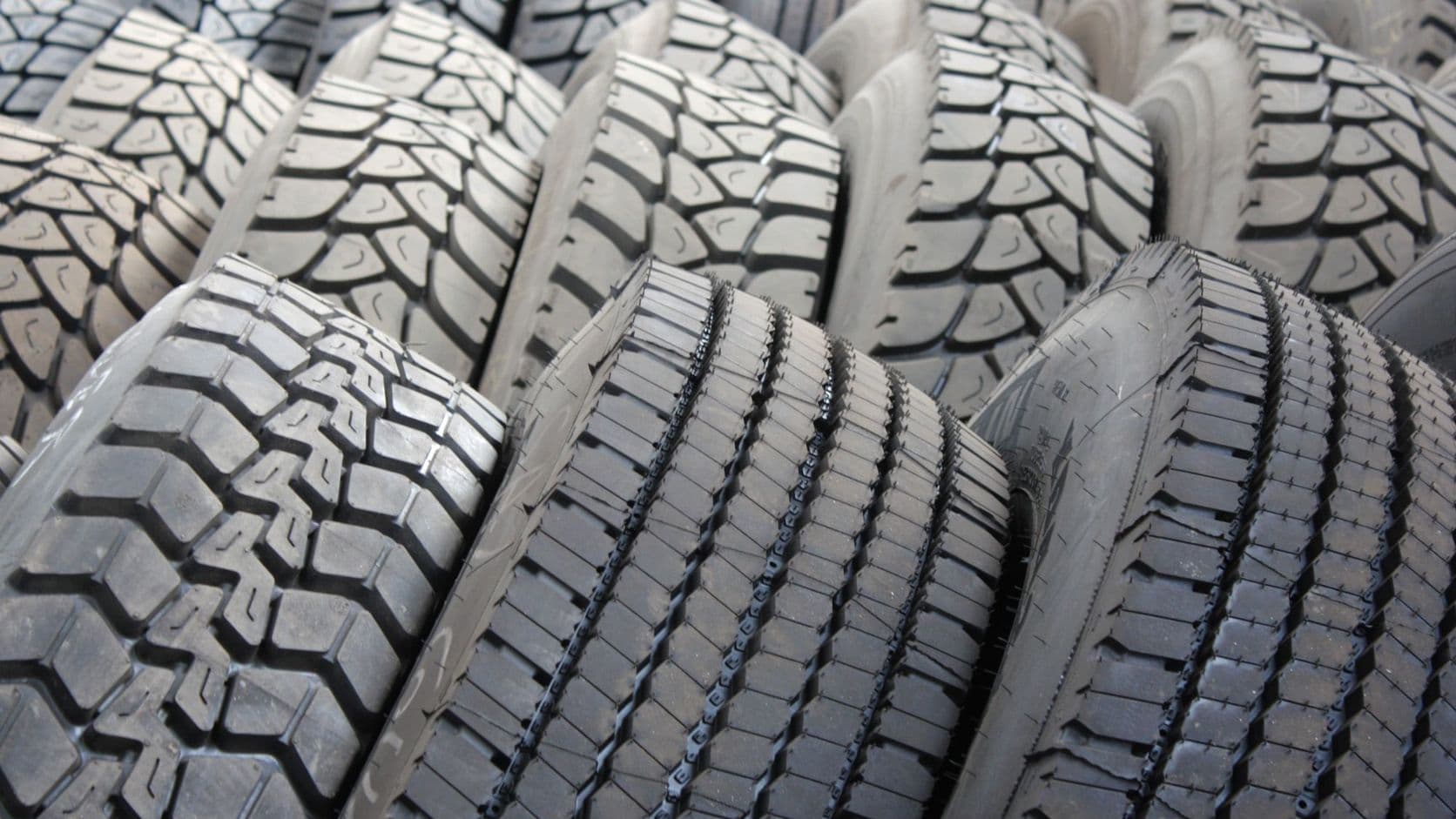
Rows of stacked tyres showing their tread patterns
TyresRegulation (EU) 2020/740

The law

The regulation that governs it. Every statement below names the instrument it comes from, the article it sits in, and the date of the copy we hold.

Held instrument

Regulation (EU) 2020/740

The tyre labelling regulation is the in force data duty here. It is unusual among held instruments in requiring both a printed label and a database registration from the same values.

  • A tyre placed on the market must be accompanied free of charge by a label showing the class for each Annex I parameter, together with a product information sheet.Art. 4(1) · 1 May 2021In law
  • For distance selling the label must be displayed close to the price indication and the information sheet must be accessible, with a nested display allowed for internet sales.Art. 4(2) · 1 May 2021In law
  • Suppliers must enter the Annex VII information into the European product database before placing a tyre on the market.Art. 5(1) · 1 May 2021In law
  • The fuel efficiency class comes from the rolling resistance coefficient and the wet grip class from the wet grip index, each on the scale in Annex I with boundaries that differ by tyre class.Annex I Parts A and B · 1 May 2021In law
  • The external rolling noise measured value in decibels must be declared alongside the noise class, which is determined against the applicable limit values in three bands.Annex I Part C · 1 May 2021In law
  • A tyre that meets the minimum snow grip index values carries the severe snow pictogram, and one that meets the ice grip index values carries the ice grip pictogram.Annex I Parts D and E · 1 May 2021In law

Source: CELEX 32020R0740 · as of 5 June 2020

Held instrument

Regulation (EU) 2024/1781

The framework regulation names tyres in the first working plan. Until a delegated act exists, the label values above are the only tyre product data required by law.

  • The first working plan must prioritise tyres for the setting of ecodesign requirements.Art. 18(5)(e)Roadmap
  • No delegated act setting ecodesign and information requirements for tyres has been adopted, so no tyre passport field set may be presented as required beyond the label data.Art. 4Not adopted

Source: CELEX 32024R1781 · as of 28 June 2024

Dates

Dates that apply. Only obligations that carry a date in a held text appear here.

Tyres obligations

Each date below restates a dated obligation in the instrument named on the card.

  1. 11 May 2021

    A tyre placed on the market must be accompanied free of charge by a label showing the class for each Annex I parameter, together with a product information sheet.

    Art. 4(1) · In law

The label duties have applied since the regulation became applicable. No tyre passport date exists in held law, because the delegated act has not been adopted.

Data model

What the passport carries. Every field, the sample value it takes, and the platform module that models it.

Sample values are fictional. Northline is an invented brand.
FieldSample
Fuel efficiency classB, from the rolling resistance coefficient
Wet grip classA, from the wet grip index
External rolling noise71 dB(A) · class B
Severe snow declarationQualifies, pictogram shown
Ice grip declarationDoes not qualify, declared explicitly
Tyre classC1
Product information sheetAvailable, linked from the label
Database registrationRegistration identifier on file

Every field above is modelled by compliance-sectors/domain/tyres/tyre-labelling-fields.ts.

The cost of waiting

What happens if you don't adapt?

A passport is checked at the point a product enters the market. When the record is missing, the product is what waits.

Products blocked from the EU market

Where an instrument requires a Digital Product Passport for a product group, products without one risk restricted access to the EU market.

A data project that becomes an emergency

A passport is a data project before it is a compliance one. Started late, it turns into re-keying, chasing suppliers and rework across systems, against a fixed date.

Audit risk and regulatory exposure

Fragmented or incomplete product data raises the risk of a failed audit, penalties and a correction you have to make in public.

The workflow

From your systems to a verified passport. Five steps, the same on every industry page, because the path does not change with the product group.

01

Create the product record

Start from the SKUs you already hold. The product record is what the passport hangs on, one per trade item.

02

Collect supplier data

Request the fields you do not hold from the party that holds them, with a due date and a trail of who answered.

03

Attach evidence

Test reports, declarations and certificates land in the evidence vault, attached to the field they support.

04

Run compliance checks

The industry template checks every required field and names the gaps before anything is published.

05

Publish the passport

The passport resolves from the product GS1 Digital Link, showing each audience only what it is allowed to see.

The bundle

The products behind it. The same platform, assembled for this product group.

Standards

The rails every passport runs on.

The passport data model, identifiers, data carriers and exchange formats follow EN 18216, EN 18219, EN 18220, EN 18221, EN 18222 and EN 18223, the six standards cited in the Official Journal by Implementing Decision (EU) 2026/1736. Norruva implements them as the rails every passport runs on.

See how we hold standards and evidence ›

Questions

Questions, answered. What teams in tyres ask before they start.

If the answer you need names a date, it comes from the held text of the instrument cited above it.

  • No. The delegated act for tyres has not been adopted, so no tyre passport field set is required by law beyond the label and database data in Regulation (EU) 2020/740.

  • The Annex VII information, before the tyre is placed on the market. The public part covers supplier identification, the tyre type identifier, the label in electronic format and the label parameters. The rest is a compliance part for authorities.

  • Yes. Article 4(2) requires the label close to the price indication and the information sheet accessible for distance selling, with a nested display allowed on the internet.

  • Not in the text. Parts D and E key the pictograms on meeting the minimum index values, so both are modelled as declarations conditional on performance rather than on tyre class.

Start your first passport.

Model tyres in test mode, or talk to us about the rollout across your catalog.