Digital Product Passport infrastructure to protect and grow your market access.

Create passports, connect supplier data, validate regulatory requirements, and share trusted product records across supply chains, from your first SKU to your global product portfolio.

  • 27 EU member states
  • QR & GS1 Digital Link
  • W3C Verifiable Credentials
  • Test and live modes
The platform

The platform behind every passport you ship. Capture, validate, and publish Digital Product Passports, built to work for a single SKU or a global catalog.

Passport readiness
87%
Readyfor complianceSample product
Compliance checklist
  • ESPR fields complete
  • EN 18219 aligned
  • !Missing recycled content evidence
Compliance coverage over time
MarAprMay

Digital Product Passport

See the passport for your category.

Select a category to preview the data, evidence and compliance fields its passport carries in Norruva.

Ordered by when each industry's passport becomes mandatory. Years without a month are not set in law yet.

ProductsEV Battery Pack 75 kWhPublished

EV Battery Pack 75 kWh

Component coverage
100%
Supplier data collected
99%
Data points mapped
22

Carbon & materials

Carbon footprint class
CO₂e per kWh
62 kg CO₂e per kWh
Recycled shares
Cobalt 18% · Lithium 7% · Nickel 9%
State of health
100% · 0 cycles
Due diligence
Third-party verified

Who uses this passport

  • RepairerReads state of health and dismantling information
  • RecyclerFinds hazardous substance locations and recycled shares
  • Market surveillanceChecks the carbon footprint class and due diligence
  • EU Battery Regulation 2023/1542
  • Carbon footprint declaration
  • Due diligence on raw materials
  • Recycled content shares
  • State-of-health data access
  • Mandatory QR passport (Feb 2027)
The cost of waiting

What happens if you don't adapt?

The EU Digital Product Passport is moving from proposal to obligation. Waiting until a deadline turns a data project into a market-access emergency, the first hard cut-off is already inside your planning horizon.

Products blocked from the EU market

Where a delegated act requires a Digital Product Passport for a product group, products without one risk restricted access to the EU market.

Operational delays and increased costs

Manual compliance processes lead to slower time-to-market, higher operational overhead, and repeated data rework across systems.

Audit risk and regulatory exposure

Fragmented or incomplete product data increases the risk of failed audits, penalties, and reputational damage.

Regulatory timeline

EU Digital Product Passport timeline

A practical view of how Digital Product Passports move from regulation to rollout, and what companies should prepare for next.

  1. 12024

    ESPR enters into force

    18 Jul 2024, the EU establishes the framework for Digital Product Passports.

  2. 22025

    Consultation & working plan

    Priority product groups and DPP requirements move closer to implementation.

  3. 32026

    Infrastructure & standards rollout

    Registry, web portal, identifiers, data carriers and interoperability work advance.

  4. 418 Feb 2027

    Battery passport obligation

    Battery passports become mandatory for LMT, EV and eligible industrial batteries.

    Next hard deadline
  5. 52027-2030

    Sector-by-sector expansion

    Additional product groups phase in through delegated acts under ESPR.

  6. 62030+

    Scaled DPP economy

    Digital product data becomes a core layer for compliance, trade and circularity.

Track the shiftSee how regulation turns into product-level operational work.
Prepare earlierClose data gaps before deadlines create launch blockers.
Scale with confidenceBuild reusable DPP workflows across your portfolio.

What companies should do now

  1. Map products, SKUs and components
  2. Collect supplier evidence and documents
  3. Model required DPP data
  4. Validate compliance readiness
  5. Prepare passport publishing workflows

The timeline reflects current EU policy intent and published dates (ESPR). Specific product-group dates may be updated through delegated acts.

For enterprises

Transform your enterprise with agile compliance infrastructure

Norruva for Enterprises ›

Built for manufacturers and brands preparing for ESPR deadlines, across batteries, textiles, electronics, and more, from a single source of truth.

Jurisdiction profile
European Union · one passport record
Member states
27
Official languages
24
Regulations
ESPR · Battery · REACH · EUDR · CPR
Credentials
W3C Verifiable Credentials
Locale review
Regulated text per language
Local previews
Compiled from one passport record

Realise value faster with dedicated experts

Onboarding services. Get tailored guidance on implementation, supplier onboarding, and catalog migrations.

Get support ›

Implementation partners. Work with vetted consulting partners to deploy compliance on your behalf.

View pricing ›

Support plans. Receive ongoing assistance for audits and technical questions with tiered plans.

View pricing ›
For startups

Build a compliance foundation for your startup. Start free in test mode, then go live.

Norruva for Startups ›

From D2C brands to circular-economy pioneers, Norruva gives startups passport templates, an API, and a place for the evidence behind each disclosure.

Carbon analytics

Send the carbon footprints you calculate into each product's passport, with the method on record.

APIs & Integrations ›

Resale & re-commerce

Show buyers a pre-owned product's passport, with its repair instructions and spare parts.

Product Passports ›

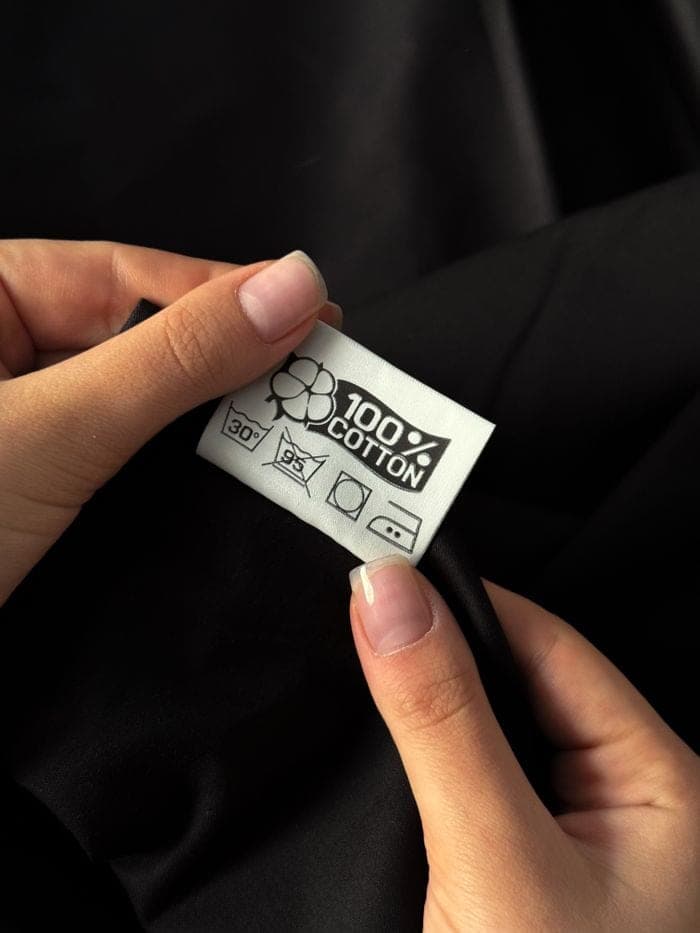
Textile recycling

Read fibre composition and fibre-to-fibre potential from the passport before you sort.

DPP for Textiles ›

Circular materials

Declare recycled content and its source for the brands you supply, with the certificate behind it.

Supplier Data Collection ›
For platforms

Onboard your sellers to Digital Product Passports. Request their data, check it, and publish through one API.

Norruva for Platforms ›

For marketplaces and platforms that list products from other brands. Sellers answer your data requests in Norruva, and the API connects the passports you publish to your own catalog.

Seller data requests

Ask each seller for the fields a passport needs, with a deadline, and see which requests are still pending.

Supplier Data Collection ›

API and webhooks

Publish passports through the API, and get a webhook when a product is published or passes its compliance check.

APIs & Integrations ›
Infrastructure

Build on the Digital Product Passport API. Create products, publish their passports, and resolve them through GS1 Digital Link.

60+endpoints in the API reference
v2one stable major version, at /api/v2
11calls from zero to a publicly resolvable passport
Integrate

Choose an integration path.

Follow the quickstart against a sandbox tenant with copy-paste requests. Every refusal names its reason, so the error body tells you what to fix.

No-code passports.

Generate and publish passports right from the Norruva dashboard, no engineering required.

Open the sandbox ›

Bring your data in.

Import products from CSV, where one bad row does not fail the batch, and bring in AASX packages and EPCIS events.

Import jobs ›

Build your own.

Every endpoint in the API reference shows its request in HTTP, cURL, JavaScript, Python and Go.

Quickstart ›
Developers

Test the API from your browser.

Select an endpoint, provide parameters, and inspect the live response.

Webhooks

Subscribe to events instead of polling.

Each delivery is signed, replay-protected and retried.

Sandbox

Create a passport with the API. Run every step in a sandbox first.

A simulated run with sample data. In a sandbox, nothing you do anchors on-chain, sends production emails, submits to external registries or bills.

The trust layer
for the circular economy

27EU member states covered
20+EU regulations mapped to requirements
2open standards: AASX and GS1 Digital Link
3templates for batteries, electronics and textiles

ESPR, explained.

What the regulation requires of a Digital Product Passport, who it applies to, and its key dates.

Read the ESPR guide › (opens in a new tab)
Norruva.org
What's new

What's happening. Recent EU enforcement actions and trade measures.

FAQ

Questions, answered.

The short version of what teams ask before their first passport. For everything else, the docs, and the sandbox itself, go deeper.

Read the docs ›
  • A structured digital record of a product, its identity, materials, compliance evidence and lifecycle, reachable through a data carrier such as a QR code. Under the EU's ESPR framework it becomes, category by category, a condition of placing products on the EU market.

  • ESPR entered into force in July 2024. The first hard product deadline is the battery passport in February 2027, with further categories phasing in through delegated acts from 2027 onward. The timeline above tracks the published dates we follow, and the data work starts well before your category's cut-off.

  • Norruva has passport templates for batteries, electronics and textiles today, each mapping the data, evidence and compliance fields its rules ask for. Tyres, furniture, construction and chemicals are modeled in the platform too, as the category explorer above shows.

  • No. Trust infrastructure is something Norruva operates for you: records are issued as W3C Verifiable Credentials, anchored to the EU's EBSI infrastructure, and sealed with eIDAS qualified seals (QSeal). You choose what to anchor and what to share.

  • Start in a sandbox: model products, run the automated checks, simulate supplier submissions and publish watermarked test passports. Nothing is billed or anchored. Open the sandbox ›

  • Each product is metered by its own value event. Base capabilities are included, and usage such as published passports, supplier submissions and compliance checks is metered, so what you pay follows what you use. See pricing for plans and how billing works for what each product includes and what it meters.

Get started

Publish your first passport.

Model a product, collect its evidence and publish it. Or bring us your catalog and we will scope the work with you.

Try it without an account

Run the whole journey on sample data. Nothing anchors, bills or leaves the sandbox.

Open the sandbox ›

Build it into your stack

Every endpoint, in HTTP, cURL, JavaScript, Python and Go.

Read the docs ›